Passport How It Works Compare Technology Team FAQ Contact Get in Touch
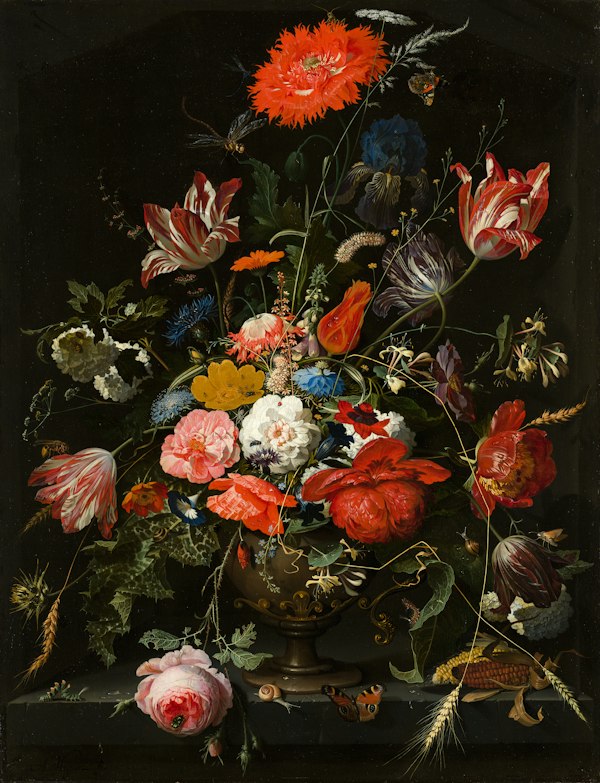
Two people using MIRAS to scan and authenticate an artwork — Visual DNA, Provenance, Blockchain and AML compliance verified in one passport

Prove it’s real.
Prove it’s compliant.
In one passport.

The physical trust layer of art finance.

Authentication and computational AML scoring for every artwork — the compliance infrastructure standard that connects physical objects to financial transactions. For banks, insurers, and galleries who need proof, not promises.

EU AMLR 2027 · Compliance Infrastructure Standard
Compliance is no longer a local problem.
MIRAS is built cross-border from day one.
European Union
AMLAR Reg. 2024/1624 · 6AMLD
In force · AMLA supervisory regime
United States
Art Market Integrity Act (S.2400)
119th Congress · FinCEN enforcement scope
United Kingdom
HMRC AMP Regime · MLR 2017
In force · new GBP 10,000 threshold 2026

Built for Your Industry

Different problems.
One platform that solves them all.

Whether you need to verify authenticity, prove compliance, or protect a legacy — MIRAS is built for the way you work.

“Am I insuring a real artwork — or a liability?”

Insurance

Quantify risk before you underwrite. Verify authenticity, flag provenance gaps, and generate audit-ready reports — all in one platform.

Visual DNA Technology AML Score Engine
See how it works →
“Does this collateral survive a compliance audit?”

Banks & Art Lending

Automated AML/KYC on every artwork and counterparty. Compliance reports ready for regulators and internal audit. Minutes, not months.

AML Score Engine goAML-ready STR
See how it works →
“Can we prove this provenance is clean?”

Galleries

Biometric-level authentication for every work. Provenance tracked with wartime flags, automated gap analysis, and verification open to anyone.

Visual DNA Technology Standalone verify
See how it works →
“How do I protect my work from day one?”

Artists

Your art is born with a unique, unforgeable identity. Visual DNA registered at creation. Provenance starts from you and follows the work forever.

DNA from day zero
See how it works →
“Is this artwork what the seller says it is?”

Collectors

Own it with proof. Visual DNA authentication, blockchain-anchored provenance, and a MIRAS Passport for every artwork in your collection.

Visual DNA Technology MIRAS Passport
See how it works →
“How do we comply at volume without hiring a compliance team?”

Dealers & Auction Houses

Full AML compliance at scale. ORS + ARS dual-engine scoring, ALR stolen-art checks, EDD, STR generation, multi-user access, and API integration.

AML Score Engine ALR Integration
See how it works →
“How do we protect a 10,000-piece collection on a shrinking budget?”

Museums & Institutions

Zero-cost registration through data-trade. Protect your collection with Visual DNA authentication while contributing to the world’s art intelligence infrastructure.

Free data-trade model Visual DNA Technology
See how it works →

The only purpose-built compliance infrastructure that combines physical authentication and AML scoring in one workflow — ready before AMLR enforcement begins. Get in touch →

The Problem

The art world runs on trust.
Not on proof. Not on compliance.

Provenance records are scattered across galleries, auction houses, and private archives. Paper certificates can be forged. No system proves that a document belongs to this specific physical object. And with the EU Anti-Money Laundering Regulation (2024/1624) now requiring art dealers to perform risk-based due diligence, the industry has zero computational tools designed for art market compliance.

Bloomberg exists for finance. DUNS for companies.
Nothing exists for art at the same level of institutional rigour.

$68B
Annual global
art market
$30B
Art-secured
lending
0
Universal
standard
0
Domain-specific
AML tools

The Solution

The MIRAS Passport™

One digital identity that proves authenticity, traces ownership, and scores AML risk.

MRS-2026-A7F3B2K9
PoP Level 2
Colorful abstract painting in thin frame
Visual DNA™ Fingerprint
Composition in Blue and Yellow (Study II)
Elena Vasquez · b. 1974 · Spanish
Oil on canvas · 92.1 × 73.0 cm
Galleria dell'Arte Moderna · IC-00142
0x7a3f...b92e1d · Block #148,207
Provenance Chain
2024 Private Collection, Italy
2021 Galleria d'Arte, Milano
2018 Collezione Privata, Roma
2016 Atelier dell'Artista
GREEN — 12/100 — Low Risk
LowMediumHighCritical
MIRAS Visual DNA™
NFC Bound
AML Cleared
Download Sample Passport (PDF)

Demo report — illustrative data only

How It Works

From artwork to passport
in four steps

1

Register & Document

A credentialed gallery or institution creates the artwork record with provenance chain, documentation, ownership history, and metadata.

2

Visual DNA™ Captured

Two photos (front + back) are processed by our DINOv2 vision engine to generate an irreplicable visual fingerprint. The front captures the artwork’s unique physical DNA; the back documents provenance labels and stamps. NFC tag optional.

3

AML Risk Scored

Two domain-specific engines (Client, Artwork & Context) assess 15 risk variables with dynamic weights. Risk band assigned: Green, Yellow, Orange, or Red.

4

Passport Issued

Authentication, provenance, AML score, and audit trail are anchored on dual-layer blockchain. The artwork receives its permanent, verifiable digital identity.

One passport. Audit-ready for banks, insurers, and galleries.

Every verification step is recorded on an immutable blockchain — private for confidential records, public for immutable proof. Valid for 6 months, renewable on re-scan.

New & Legacy Artworks

One platform, every artwork —
from today’s studio to yesterday’s collection

Most art-tech platforms only handle newly created works. MIRAS is built for the real market — where the majority of transactions involve artworks with decades or centuries of history.

New Artwork

Created today, registered today

For artworks leaving the studio for the first time. The artist or gallery registers the work with full certainty — provenance starts clean.

1

Curator registers

Metadata, dimensions, medium, artist identity.

2

Visual DNA generated

Unique fingerprint from the artwork’s physical surface.

3

NFC chip bonded

Cryptographic tag physically attached to the work.

4

AML risk scored

First transaction scored by the 2-engine system.

5

Passport issued

Blockchain-anchored digital identity — permanent.

Provenance Depth Score: 100% — Full documentation from the moment of creation. Zero gaps.
Legacy Artwork

Created decades ago, registered now

For artworks with existing history. MIRAS automates provenance research, identifies gaps, and scores what can be verified — with full transparency about what cannot.

1

Curator submits documentation

Existing certificates, invoices, exhibition history, prior ownership records.

2

Automated provenance research

MIRAS queries 10+ external databases via API — stolen-art registries (ALR, Interpol), sanctions lists (OFAC, EU, UN), auction records, cultural heritage registers.

3

Gap analysis & risk flags

Provenance Depth Score computed. Temporal gaps identified. Wartime period (1933–1945) flagged automatically. Jurisdiction risk assessed.

4

Analyst review

Human-in-the-loop validation. Physical archives, oral history, and material analysis remain human tasks — MIRAS is transparent about these boundaries.

5

Visual DNA + NFC binding

Same authentication layers as new artworks.

6

Passport issued with provenance map

Includes documented chain, identified gaps, and an honest completeness score.

Intellectual honesty as competitive advantage. MIRAS never claims 100% provenance where it doesn’t exist. Instead, it quantifies exactly what is documented and what remains unknown — which is precisely what compliance officers, insurers, and regulators need.

10+ automated data sources including Art Loss Register, OFAC SDN, EU Sanctions, UN Consolidated List, Interpol Stolen Works, OpenSanctions, PEP databases, corporate registries, and national cultural heritage registers. Semi-automated and human-only sources are clearly documented for each artwork.

We grew up around art. Our family collects, and we both paint. We saw the gap firsthand — paper certificates that could be forged, provenance chains held together by trust, and zero computational tools for the people who insure, lend against, or regulate these assets. We thought: if banking has Bloomberg and compliance has ComplyAdvantage, why does art have nothing? So we built the infrastructure standard — and filed the IP to protect it.
MA
GA

Margherita & Ginevra Angheben

Co-Founders · CBS International Business School

35
IP claims filed
additional protection
26
AML risk variables
in the scoring engine
0
Competitors with a
purpose-built compliance stack

The Market Today

The only purpose-built compliance infrastructure for art

First to market before AMLR enforcement. Every Artwork Record strengthens the network. No existing vendor offers a single integrated stack built from the ground up for art market compliance.

Capability
Authentication-
only
e.g. Verisart, Arcual
AML / KYC
software
e.g. ArtAML, ComplyAdv.
Due-diligence
networks
e.g. Arcarta, FAL
MIRAS.ART
Integrated compliance infrastructure (authentication + AML in one stack)
Purpose-built for art market regulation — not bolted together
Physical-layer authentication (NFC + Visual DNA)
~
Blockchain-anchored digital certificate
Computational AML risk engine (multi-variable, dynamic weighting)
~
Multi-jurisdictional coverage (EU·US·UK out of the box)
~
~
Purpose-built domain-specific technology (with IP protection)
Insurance-grade data (underwriting + post-claim)
~

Full coverage~ Partial / manual Not offered
Based on public information about existing art-market vendors as of May 2026.

The Team

Art, finance, technology

An interdisciplinary team spanning entrepreneurship, blockchain architecture, institutional banking, art markets, and regulatory law.

Founders
TA
Tullio Angheben
Founder & CEO

Founder & CEO of Hofburg Group (2007–present). Multi-sector entrepreneur spanning construction, technology, sustainability, and the arts, with international exits including Let’s Pizza, Greenrail, and Hypertym. Now applying that builder’s mindset to digital infrastructure. Conceptualized MIRAS from direct observation of regulatory gaps in art finance. Leads strategy, institutional partnerships, and investor relations.

MA
Margherita Angheben
Co-Founder & Financial Analyst

MSc Applied Economics, Copenhagen Business School. Co-founded Revy, applying financial analysis and securing EU structural funds. Professional artist. Represents the collector and creator class driving MIRAS adoption — the art market of tomorrow.

GA
Ginevra Angheben
Co-Founder & Financial Analyst

MSc Applied Economics, Copenhagen Business School. Co-founded Revy, leading financial modelling and structural funding strategy. Co-creator of the original MIRAS concept. Responsible for financial modelling, growth strategy, and go-to-market planning.

Executive Team
AB

Andrei Bals

Technology Entrepreneur & Strategic Advisor

Serial entrepreneur with two decades building deep-tech B2B companies from spinoff to global scale. Founded Omnisens SA (fibre-optic sensing infrastructure) before its acquisition and led European expansion at Picarro Inc. With his engineering background Andrei brings the rare combination of hands-on technical depth and multi-company entrepreneurial execution applied to turning complex technology into defensible, scalable business models. At MIRAS, he channels that experience into scaling a deep-tech platform from pilot to industry standard.

Ezio Grieco

CTO — Blockchain & Architecture

Economist, IT Architect & Blockchain Developer with over 15 years at the intersection of distributed systems and financial infrastructure. Designed the full MIRAS technical stack: dual-layer blockchain anchoring, Data Vault architecture, Visual DNA processing pipeline, and institutional API layer. Previously built enterprise solutions for regulated industries. Combines economic rigour with deep technical execution.

PG

Piero Giovannini

CFO

Founder of Savino & Partners and now Axevera, with 40 years of experience in growth-stage finance, investor reporting, and capital allocation. Senior art market professional with an extensive institutional gallery and collector network across Europe. Brings deep financial discipline and art-world credibility to MIRAS.

Andrej Suknev

Legal & Compliance

International legal counsel specialising in cross-border compliance, corporate governance, and regulatory frameworks. Ensures MIRAS’s adherence to AML/KYC requirements and data protection standards across jurisdictions.

EM

Elisabeth Marascalchi

Head of Institutional Relations — Gulf & ME

Based in Doha. CEO of Riva Contracting with 20+ years of cross-cultural business leadership across Europe and the Gulf. Founded “Art for Peace” (Qatar, 2025), bridging contemporary art with diplomatic soft power. Maintains deep relationships with sovereign wealth funds, royal family offices, and institutional collectors across the GCC. Strategic gateway for MIRAS’s expansion into Gulf art finance, museum digitisation programs, and sovereign wealth initiatives.

Board & Advisors
MR

Marco Mario Rapini

General Counsel — EU Regulatory

Partner, Rapini & Seyssel Studio Legale Associato, Milan. Expert in commercial, regulatory, and compliance law across EU jurisdictions. Advises on AML frameworks, GDPR, IP structure, and data partnerships.

SC

Silvio Cattani

Institutional Advisor

Vice-President, MART — Museo di Arte Moderna e Contemporanea di Trento e Rovereto. Director, Istituto di Arte di Rovereto since 1984. Nationally and internationally recognised artist.

GR

Gaby Reniero

IP & Copyright Advisor

Expert in intellectual property and copyright law. Advises on artist rights frameworks, digital provenance legal architecture, and IP litigation protecting blockchain-anchored ownership records.

AM

Andrea Maurin

Strategic Advisor

Founder & Principal of Fedan SA, a Swiss privately held company with diversified investment interests. Extensive cross-border network spanning institutional investors, family offices, and strategic partners.

TF

Thomas Faure Romanelli

Financial Advisor

MIoD — Member of the Institute of Directors (UK). Founder & Chairman, Plus Capital Ltd. 20+ years as investment banker in London. Live network in private banking, family offices, and art-secured lending.

GP

Gael Poclot

Legal & Business Advisor

Seasoned lawyer and entrepreneur with deep expertise in international contract law and an extensive network across global markets.

Under the Hood

Financial-grade infrastructure

MIRAS Visual DNA™ Engine

A domain-specific computer vision engine powered by DINOv2 self-supervised vision transformers. Two photographs — front and back — generate a 384-dimensional visual fingerprint that captures micro-features invisible to the human eye: brushstroke texture, canvas weave, pigment craquelure. Even a master copy produces a completely different vector. Protected by filed IP (10 claims).

Core Technology · IP Protected · 10 Claims
384-dim Visual fingerprint per artwork

Public Blockchain Anchoring

Every passport hash anchored on an enterprise-grade public blockchain. Independent Audit Node verifies every anchor. Any third party can verify integrity without trusting MIRAS.

NXP NTAG 424 DNA

Military-grade NFC chips with per-scan cryptographic rotation. Tamper-evident circuit. Impossible to clone.

GDPR by Architecture

Personal data in encrypted Data Vault. Blockchain stores only hashes. Right to erasure built in from day one.

RESTful API (JSON-LD / LIDO)

Machine-readable data in international museum standards. Integrates with museum systems and Bloomberg terminals.

SOC 2 & Independent Audit

Independent audit node for on-chain verification. SOC 2 Type I certification in Year 1. Penetration tested before launch.

MIRAS AML Risk Scoring™ Engine

Purpose-built composite risk scoring system with two independent engines: Owner Risk Score (6 variables) and Asset & Context Risk Score (9 variables). Dynamic weight adjustment via 7 contextual modifiers. Integrated anomaly detection connecting authentication data with financial risk indicators. Human-in-the-loop governance compliant with EU AI Act. IP protected (10 claims).

AML Compliance Engine · IP Protected · 10 Claims
6
ORS vars
9
ARS vars
15 variables · 7 modifiers

Peer-Reviewed Research

Cross-layer anomaly detection framework published on SSRN. The MIRAS research team collaborates with independent researchers and academics in computer vision, blockchain security, and financial compliance.

Published Research

Academic foundations,
peer-reviewed methodology

Our AML scoring framework is grounded in published academic research — bridging the gap between regulatory theory and computational compliance for the art market.

📄 SSRN Working Paper · 2026

Cross-Layer Anomaly Detection for AML Compliance in the Art Market: A Multi-Engine Scoring Framework

Tullio Angheben · MIRAS.ART — MARGIN International LLC
Margherita Angheben, Ginevra Angheben · CBS International Business School
SSRN Electronic Journal · Paper #6584859

This paper introduces a multi-engine scoring framework purpose-built for anti-money laundering compliance in the art market. The system employs two independent scoring engines — Owner Risk Score (ORS) and Asset & Context Risk Score (ARS) — comprising 15 proprietary variables and 7 contextual modifiers. Using weighted aggregation, the framework produces composite risk scores that enable art dealers and compliance officers to meet obligations under EU Regulation 2024/1624 (AMLAR) with computational precision rather than subjective judgment.

15
Risk Variables
2
Scoring Engines
7
Modifiers
62
Feature Space
Read the full paper on SSRN →

From the MIRAS Desk

Insights on art market compliance

Briefings for compliance officers, gallery directors and art finance professionals navigating the new regulatory landscape across Europe, the United States and the United Kingdom.

◆ United States · AMIA

What the Art Market Integrity Act means for US galleries

The bipartisan S.2400 bill (introduced July 2025) would bring US art dealers under FinCEN oversight for the first time, extending AML, recordkeeping and customer due-diligence obligations. We unpack the small-business carve-out (under USD 50,000 in annual transactions), the implementation timeline, and what a compliant program looks like in practice.
Briefing · May 2026 Request briefing →
◆ United Kingdom · HMRC

HMRC’s new GBP 10,000 threshold for Art Market Participants

Effective May–June 2026, the UK currency threshold for AMP regulated activity converts from EUR 10,000 to GBP 10,000 — pulling more transactions into the AML perimeter. With 335 HMRC penalty notices issued in H1 of the 2025 reporting period, including a GBP 158,679 fine on a single London gallery, the cost of weak compliance has never been higher.

Briefing · May 2026 Request briefing →
◆ European Union · AMLAR

AMLAR 2024/1624: from rules to risk-based scoring

The new EU AML Regulation moves art market participants from rule-based compliance to risk-based due diligence — but the regulation offers no computational guidance. Our SSRN-published 2-engine framework (ORS/ARS, 15 variables, 7 contextual modifiers) translates AMLAR’s risk-based requirement into a defensible, auditable scoring methodology.

Working paper · SSRN 2026 Read paper →

Frequently Asked

Questions from institutions

If your question is not answered here, write to info@miras.art.

What jurisdictions does MIRAS cover out of the box?+

MIRAS is pre-built for the three regulatory regimes that matter most for cross-border art transactions: EU AMLAR Regulation 2024/1624 and 6AMLD, UK HMRC Art Market Participants regime under MLR 2017, and US Art Market Integrity Act (S.2400) — pending enactment. Our compliance workstation, audit trail and STR generation map to all three.

Are you affiliated with MIRA Imaging or any other “MIRA” brand?+

No. MIRAS.ART is a venture of MARGIN International LLC, a Delaware-registered entity, with two filed Italian patents (UIBM #102026000009442 and #102026000010327). We are not related to MIRA Imaging (miraimaging.com), MIRA Art Fair, or any other entity with a similar name.

If you have been referred to MIRAS.ART, please confirm the URL is www.miras.art and the contact email is info@miras.art.

How is MIRAS different from existing art authentication or AML compliance platforms?+

Today the market is fragmented. Authentication platforms (e.g. NFC + blockchain registries) cannot enforce regulatory compliance. AML / KYC software is designed for finance, not art. Due-diligence networks are checklist tools without computational risk scoring or physical-layer authentication.

MIRAS is the only system that integrates physical-layer authentication (Visual DNA + NFC), blockchain certification and a 15-variable computational AML risk engine in a single institutional stack — purpose-built for cross-border art market compliance from day one, with additional IP protection via two filed patents. See the capability matrix.

What is the AML Risk Score and how is it computed?+

The MIRAS AML Risk Score is a composite (0–100) produced by two independent scoring engines — Owner Risk Score (ORS, 6 variables) and Asset & Context Risk Score (ARS, 9 variables) — combined via weighted aggregation with 7 contextual modifiers (jurisdiction, transaction type, counterparty risk, etc.). Output is classified into four risk bands (Green, Yellow, Orange, Red).

The methodology is documented in our peer-reviewed SSRN working paper, with additional IP protection filed (10 claims).

Can insurance carriers use MIRAS data?+

Yes. Art insurers can integrate MIRAS data into two workflows: underwriting (using the AML Risk Score and provenance integrity as pricing inputs) and post-claim verification (using Visual DNA to confirm an object’s identity after damage, theft or fraud claims). API access is available for carriers via a structured JSON-LD endpoint.

How are personal data handled under GDPR?+

MIRAS is GDPR by Architecture. Personal data is held in an encrypted Data Vault separate from the blockchain layer. The blockchain stores only cryptographic hashes — never personal data — resolving the well-known tension between immutability and the right to erasure. Right-to-erasure requests are honoured at the Data Vault level without breaking on-chain integrity.

Is MIRAS available today?+

MIRAS is in active development. Our SSRN paper is published, IP protection is filed (two patents, 20 claims), and we are currently building our network of credentialed Curators (galleries, museums, auction houses) and compliance partners ahead of AMLR enforcement. Institutional buyers can get in touch to be among the first to deploy the platform.

How can I partner with MIRAS as an authentication lab, insurer or dealer network?+

MIRAS is built to interoperate. We work with scientific authentication laboratories (pigment analysis, spectral imaging) as upstream partners that feed certified attribution data into the MIRAS Passport, with insurance carriers as data consumers, and with dealer networks as distribution channels. To explore a partnership, register for early access.

What about artworks created before MIRAS existed?+

MIRAS is purpose-built for both new artworks (created and registered from day one) and legacy artworks (existing works with decades or centuries of history). For legacy artworks, our system automates provenance research by querying 10+ external databases via API — including the Art Loss Register, OFAC, EU and UN sanctions lists, Interpol’s Stolen Works database, and national cultural heritage registers.

The system computes a Provenance Depth Score that quantifies how much of an artwork’s ownership history is documented, automatically identifies temporal gaps, and flags sensitive periods (1933–1945). We are transparent about what can be automated and what requires human expertise: physical archives, oral history, and material analysis remain analyst tasks. See our New & Legacy Artworks section for the full workflow.

Can I verify an artwork without an NFC chip?+

Yes. Our Visual DNA™ technology works as a complete, standalone authentication layer. Anyone can verify a registered artwork by simply photographing it with a smartphone. The system compares the new image against the stored fingerprint using DINOv2 vision transformers, delivering a match result in under two seconds.

When an NFC chip is also present, MIRAS performs dual verification (physical tag + visual fingerprint) for maximum security. Visual DNA alone provides false positive rates below 0.01%, with additional IP protection via filed patents. See Technology.

How does MIRAS handle provenance gaps?+

Rather than ignoring or hiding gaps in an artwork’s ownership history, MIRAS quantifies them explicitly. Our Provenance Depth Score is calculated as the ratio of documented ownership years to total years since creation. A 1920s painting with verified records from 1925–1960 and 1985–present would show a gap of 25 years (1960–1985), with a corresponding reduction in its depth score.

Gaps during sensitive historical periods (particularly 1933–1945) are flagged with elevated risk indicators. This transparency is precisely what compliance officers, insurers, and regulators need — not false certainty, but an honest, auditable assessment of what is known and what remains unverified.

Dark abstract painting

The standard is being
written now

MIRAS.ART is building the compliance infrastructure standard for art — with technology published in peer-reviewed research and IP protection filed. We are assembling our network of credentialed Curators (galleries, museums, auction houses) and institutional compliance partners across the EU, US and UK. Register for early access before AMLR enforcement begins.

Request Early Access → Book a Compliance Demo
MIRAS.ART

A MARGIN International LLC venture · Wilmington (DE) · Prague · Doha

United States

MARGIN International LLC
Wilmington, Delaware
United States

info@miras.art

Europe

Máchova 439/27
120 00 Praha 2
Czech Republic

+420 773 823 853

Middle East

The Pearl, Tower 6
Port Arabia
Doha, Qatar

+974 5503 4176